
Succession Planning
If You Don’t Plan Leadership Continuity, You’re Gambling With the Business.

Let’s Start With the Hard Truth
Every leadership team says succession is important. Very few treat it like strategy.
They treat it like:
An HR exercise
A spreadsheet update
A “we’ll deal with it later” conversation
Or a confidential CEO emergency plan
That’s not succession planning.
That’s avoidance.
Succession planning is not about retirement timelines.
It’s about business continuity, enterprise value, investor confidence, regulatory trust, and
leadership credibility.
If someone left tomorrow — unexpectedly —
Would your organization stabilize… or scramble?
That answer tells you everything.

The Market Has Shifted
We are in a leadership volatility cycle.
Tenured executives are exiting earlier.
Burnout is real.
Boards are under pressure.
Regulators are watching leadership depth.
Growth strategies require deeper benches.
AI and transformation demand new competencies.
And yet most organizations cannot clearly answer:
Who is ready now?
Who could be ready in 12 months?
Where are our leadership gaps?
What skills will we need in 3–5 years?
Are we hiring our successors intentionally?
Succession planning is no longer optional.
It is a fiduciary responsibility.

Our Succession Planning Approach
Structured. Objective. Defensible.
This is not theory.
This is a disciplined, forward-looking framework designed to protect the business and strengthen leadership pipelines.

Phase 1: Strategic Alignment
Before we assess people, we define the future.
We analyze:
Strategic growth objectives
Risk profile
Capital priorities
Regulatory exposure
Market positioning
Culture realities
Then we build a Future-State Success Profile for the role — often CEO or C-Suite - grounded in:
Strategic growth leadership
Financial stewardship
Risk and regulatory acumen
Culture and talent development
Enterprise decision-making
Board partnership
Transformation capability
Succession planning starts with defining what the future requires — not evaluating yesterday’s performance.

Phase 2: Objective Leadership Assessment
Internal candidates are evaluated against the approved Success Profile using:
Structured executive interviews
Competency scoring
Behavioral evidence
Gap analysis
Readiness categorization:
Ready Now
Ready in 6–12 Months
Developmental (12+ Months)
This creates defensible clarity.
Not politics.
Not favoritism.
Not guesswork.
Clarity.
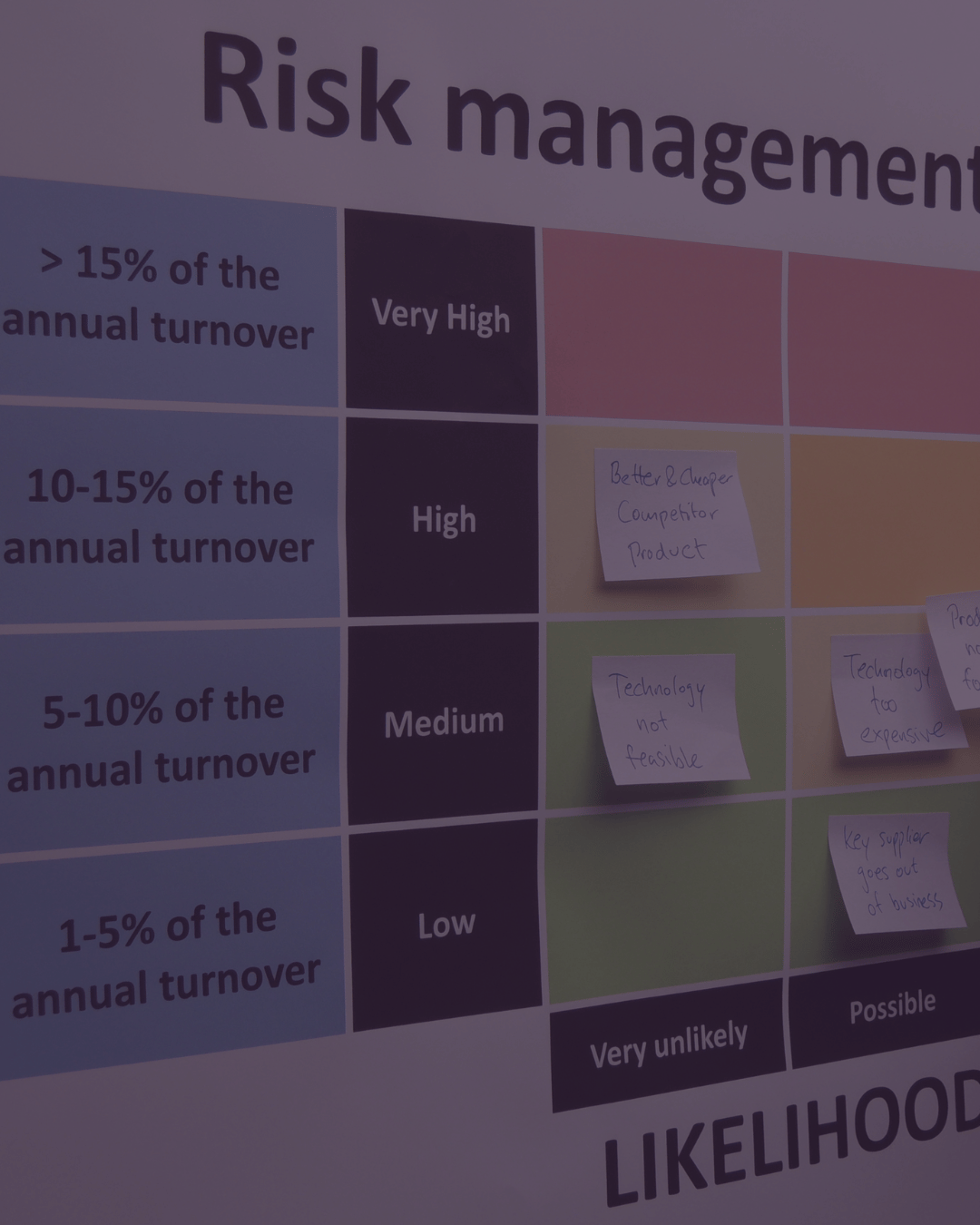
Phase 3: Gap Modeling & Risk Analysis
We then answer the questions most organizations avoid:
If we promote internally, what capability gaps remain?
What is the business risk of waiting?
What is the cost of external search vs. internal development?
Where does bench strength exist beyond the top role?
What leadership vulnerabilities exist below the C-Suite?
We map:
Depth by function
Successor pipeline strength
Critical role vulnerability
Flight risk exposure
Because succession is not one role.
It is an ecosystem.

Phase 4: Development & Action Roadmap
For internal candidates, we build:
Measurable competency development plans
Stretch assignment strategies
Coaching recommendations
Timeline projections
Clear performance milestones
For the organization, we define:
Hiring priorities tied to succession gaps
Bench-strength targets
Ongoing review cadence
Board reporting structure
Succession becomes operational — not theoretical.
Why This Matters to Enterprise Value
Weak succession planning impacts:
Investor confidence
Regulatory relationships
Employee stability
Map valuation
Strategic execution
Leadership retention
Strong succession planning does the opposite.
It signals maturity.
It reduces volatility.
It protects the balance sheet.
It strengthens culture.
It attracts high-caliber leaders.
Top executives do not join organizations that feel fragile.
They join organizations that feel prepared.

Who This Is For
Boards evaluating CEO continuity
Banks and regulated institutions under governance scrutiny
Growth-stage companies building leadership depth
Founder-led businesses approaching transition
Organizations with two internal candidates and no clarity
Companies that say “We think we have someone…” but don’t know
Hope is not a succession strategy.
Structure is.

The Frost Difference
Most succession work is reactive.
Ours is strategic.
We don’t just evaluate who could step in.
We architect:
Leadership pipelines
Bench strength
Readiness modeling
Cultural alignment
Long-term continuity
Because if you are not hiring your replacement intentionally…
You are not building a legacy.
You are building dependency.
And dependency is fragile.
The Bottom Line:
If someone left tomorrow…
Would you feel confident?
Or exposed?
Succession planning is not about preparing for retirement.
It’s about protecting the enterprise.
Let’s build leadership continuity before you need it.